How to Measure LLM Visibility
A practical guide to measuring LLM visibility across crawl activity, citations, AI-origin traffic, and attribution.
By Jonathan LiemPublished Updated

A dashboard says your AI visibility increased by 18%, but the number alone does not tell you what to do next. An AI crawler may have visited more pages, ChatGPT may have cited one guide, a buyer may have clicked through from Perplexity, or an AI-referred visitor may have booked a call.
Those are four different outcomes, and each one points to a different decision. A useful measurement system keeps them separate instead of blending them into a score that moves without explanation.
Four Questions That Tell You What to Fix
| Signal | What it proves | What it does not prove |
|---|---|---|
| Crawl activity | An identified automated system requested a page | The page was used or cited |
| Citation visibility | A page appeared as a source in an answer | Someone clicked or converted |
| AI-origin visits | A person arrived through an identifiable AI referrer | The visit created pipeline |
| Attribution | A visit or recorded touch connects to a business outcome | AI was the only influence |
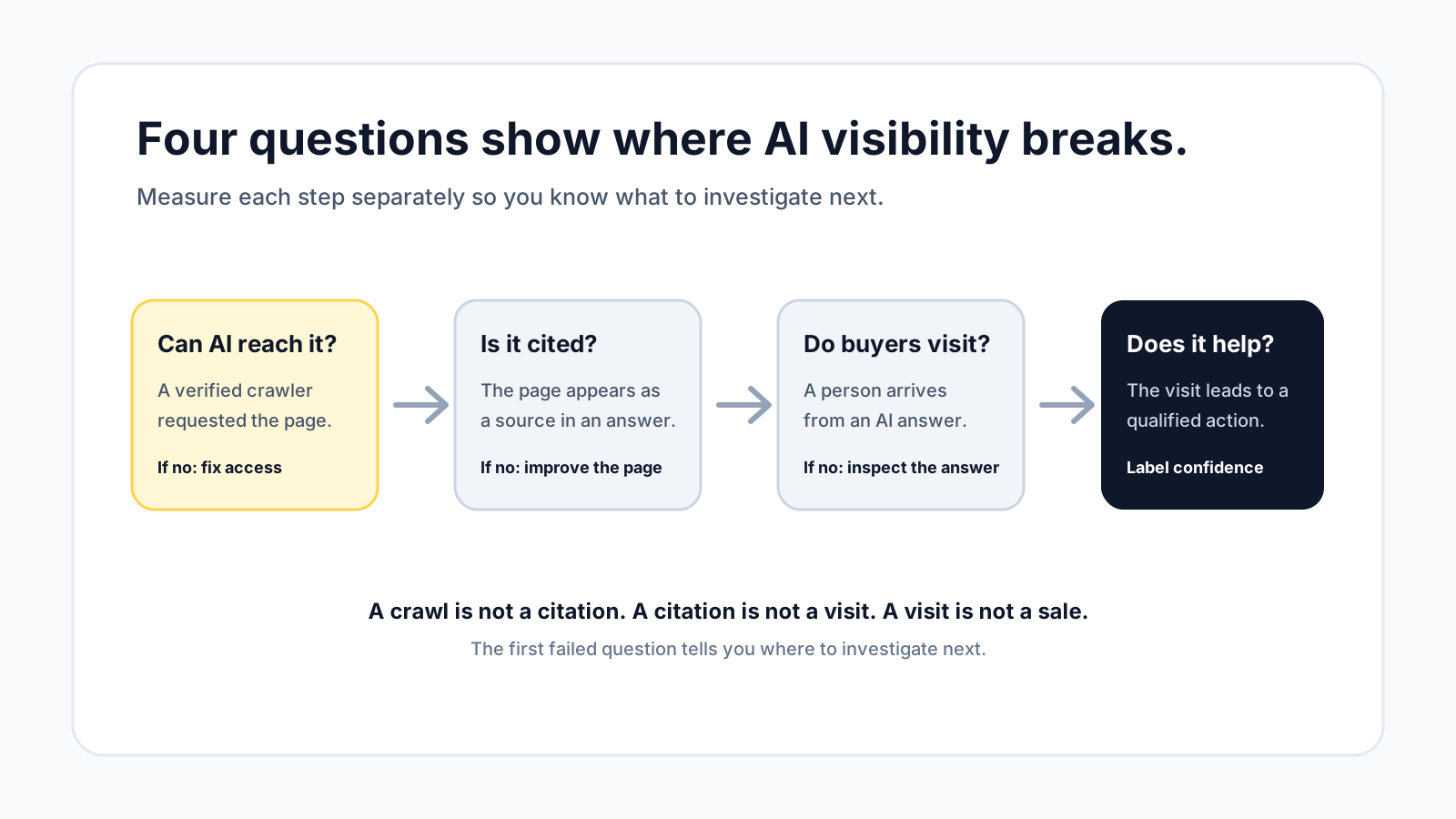
Use four plain questions:
- Can AI systems reach the page? Check whether verified crawlers can request it.
- Is the page cited? Check whether it appears as a source for buyer questions that matter.
- Do buyers visit? Check whether people click through from an identifiable AI answer.
- Does the visit help? Check whether those visits lead to qualified actions such as a signup, reply, or planning call.
Each question requires different evidence. For example, GPTBot might request your pricing guide without ChatGPT ever citing it. A citation might answer the question without earning a click. A click might land on a page that does not match the buyer's need. Measuring each step separately shows where to investigate instead of giving you one vague visibility score.
No single tool sees the whole journey. Combine the signals you can observe and label what remains unknown.
1. Check Whether AI Systems Can Access the Page
Start by tracking requests from AI crawler families at the server or edge. Because a user agent is only a claim and can be spoofed, use your provider or CDN’s verified-bot controls or validate requests against the crawler operator’s published IP ranges.
Record:
- crawler family;
- requested URL;
- timestamp;
- status code;
- method;
- user agent;
- redirects or blocks.
Microsoft Clarity’s bot activity documentation is one example of separating verified AI bot activity from human analytics.
You can hand this list to whoever owns Cloudflare, your CDN, or your server logs and ask for the five important page URLs. If nobody has log access, start with a crawler-activity tool and mark the result as partial rather than guessing.
What you are looking for:
- important pages returning errors;
- crawler requests trapped in redirect chains;
- pages that never receive relevant bot activity;
- sudden changes after a robots or deployment update.
A crawler request is an access signal, not an AI mention.
If engineering needs a concrete event contract, use the page-level AI citation tracking guide for fields, verification rules, and acceptance tests.
2. Track Citations for Buyer Questions
Next, test whether your pages are cited as sources when people ask relevant questions.
Choose a small set of questions tied to real buyer intent:
- Which AI visibility services will run the work for a lean B2B marketing team?
- How can I measure whether ChatGPT sends qualified leads?
- What should I compare when choosing an AI visibility provider?
- Can an AI visibility service guarantee revenue?
For each answer, capture:
- platform and date;
- exact prompt;
- whether web search was active;
- brands mentioned;
- URLs cited;
- the claim each citation supported;
- whether your company was described accurately.
Microsoft Clarity’s citation dashboard documentation shows the value of examining the cited page and associated grounding query rather than counting citations alone. A grounding query may differ from the exact words a person typed.
OpenAI’s ChatGPT search guidance explains that search answers can include inline citations and a Sources panel. That makes the cited URL observable even when the rest of the retrieval process is not.
Repeat important questions. AI responses vary, so one citation is evidence of one result, not permanent ownership of the topic.
3. Separate Human AI Referrals From Bot Traffic
Bot requests belong in an access report, while human visits belong in analytics; mixing them makes both signals harder to interpret.
Create an AI referral channel or exploration for identifiable sources such as ChatGPT, Perplexity, Claude, Gemini, and Copilot. Preserve the raw referrer and landing page.
Google’s guidance for AI features in Search says traffic from AI features is included in Search Console’s overall Web search reporting. That context is useful, but it does not show each step from crawler access to a qualified action.
For each landing page, review:
- sessions or users;
- engaged visits;
- key actions;
- conversions;
- geography and device where useful;
- subsequent return visits.
Some AI-influenced visits will not carry a clear referrer. A person may read an answer, remember the company, and return through search or direct navigation. Direct traffic still has many possible causes, so add buyer-declared discovery to your forms and sales process instead of relabeling it as “dark AI.”
4. Connect the Visit to an Outcome
The last signal is whether AI visibility helped create qualified demand.
For B2B, preserve:
- original source;
- ordered touch history;
- latest source;
- buyer-declared discovery;
- landing page;
- opportunity;
- revenue or gross profit.
If a buyer first arrives through organic search, later clicks a ChatGPT citation, and finally books a call directly, keep all three touches. Preserve the original source when the latest one is added.
Attribution will not always be exact, so label evidence as direct, assisted, buyer-declared, or modeled instead of forcing every journey into a single answer.
Read the Pattern Before Choosing the Fix
This table is the practical reason to measure the layers separately:
| Pattern | Likely problem | First check |
|---|---|---|
| No crawl activity | Access or discovery | Robots, status, rendering, internal links |
| Crawled but not cited | Relevance or evidence | Search intent, answer clarity, source support |
| Cited but no visits | Low-click behavior or weak promise | Citation context, title, buyer need |
| Visits but no conversions | Landing page or intent mismatch | Offer, proof, CTA, page experience |
| Conversions but no source trail | Attribution design | CRM fields and event history |
An 18% blended score cannot give you this diagnosis.
Build a One-Page Scorecard
Start with one row per important page rather than dozens of charts:
| Page | Target buyer question | Crawl status | Citation observations | AI visits | Qualified actions | Last change |
|---|---|---|---|---|---|---|
| Service page | Who can run AI visibility for a lean B2B team? | Crawler reached page | 1 of 3 runs | 12 | 1 planning call | Positioning updated Jul 12 |
| Measurement guide | How do I measure AI visibility? | Crawler reached page | 0 of 3 runs | 3 | 0 | New examples Jul 18 |
The numbers above are illustrative. The structure is the useful part.
Add two notes:
- Confidence: How complete and repeatable is the evidence?
- Next action: What will you change or test?
Now the report can guide work instead of merely proving that activity occurred.
When the business asks what those outcomes are worth, use the separate guide to measuring AI visibility ROI. This article stays focused on collecting the signals correctly.
A Practical 30-Day Measurement Plan
Week 1: Establish the baseline
For a manageable first pass, pick roughly five commercially important pages and ten buyer questions. Those counts are working heuristics, not measurement standards. Ask whoever owns your CDN or server logs for crawl status, then record current citations, AI referrals, and existing conversions. If the logs are unavailable, mark crawl status as unknown and continue with the other three layers.
Week 2: Fix the clearest break
If pages are blocked, fix access. If crawlers can reach them but the answer is unclear, improve the answer and evidence on the existing page. New content should follow a demonstrated gap, not appear by default.
Week 3: Record what shipped
Save the page, date, intended question, and exact change so the team has a clear comparison point.
Week 4: Rerun the same observations
Use the same questions and platforms, then report what changed in each layer, what did not, and what remains uncertain.
One month may be too short for a revenue conclusion. It can be enough to test whether the collection and review process works, using clearly labeled synthetic events when real events do not occur.
Frequently Asked Questions
What is LLM visibility in one sentence?
LLM visibility is the extent to which a brand and its pages appear, are represented accurately, and are cited across relevant AI answers. Traffic and conversions are downstream outcomes.
Can I measure LLM visibility with Search Console alone?
Search Console provides useful context, but it does not separately show crawler access, citations across AI platforms, identifiable AI visits, and later business actions.
What is the first metric I should track?
Track whether crawlers can reach the page and whether the page is cited. That distinction tells you whether the first problem is access or whether the page is useful enough to support an answer.
Why is attribution so important?
Attribution matters because otherwise you cannot connect a visibility outcome back to the page and the content change associated with it.
Do I need to track bots separately from humans?
Bot traffic is an access signal, while human traffic is an outcome signal, so tracking them separately makes both easier to interpret.
Does an AI crawler request mean my page appeared in an answer?
A crawler request only proves that the automated system requested the page or resource; retrieval, grounding, citation, and display are separate events.
Does a citation mean someone visited the page?
A citation can influence an answer without producing a click, which is why identifiable AI referrals should be tracked separately.
What does a good dashboard look like?
A good dashboard separates crawl activity, citation visibility, AI-origin visits, and attribution confidence by page.
Find the First Step That Needs Work
Inflect’s managed AI visibility service helps B2B teams find the buyer questions worth winning, improve the pages AI systems should trust, and report what moved. Start with the free AI visibility audit.